


















The evolution of chairs used in school have changed drastically. In the following article, you will read about the history of chairs that have been used in schools.
In the early 19th and 20th century, schools rapidly expanded. In response, the industry benefitted by making chairs and desks for students.
In the beginning, desks were often bolted to the floor or connected in rows. They then changed to more singular use.
1881: The Fashion School Desk
A company located in Sidney, Ohio, began manufacturing the popular “Fashion” school desk in 1881. They marketed the desks as, “No desk in the market is made with more care, nor of better materials than the ‘Fashion,’ and none has met with a more popular reception, or gives better satisfaction.” The desk featured a Patent T-head, eliminating screws and bolts by joining the wood of the top, back, and seat to the legs. The legs were made of cast iron.
1899: The Standing Desk
Standing desks are currently used in schools and work communities. They are an ergonomically friendly alternative to the traditional desk and chair. The standing desk can be traced back to 1899 to what Dr. Ludwig Wilhelm Johannes Kotelmann said about standing desks in his book School Hygiene.
1970’s: Wrap Around School Desk
This desk is still in use in many schools. The desk is all in one piece and not separate from each other. There was a chrome rack on the bottom enabling storage for students belongings.
2012: The Earthquake-Proof School Desk
Two students from Milan, Italy, Arthur Brutter and Ido Bruno, presented an earthquake-proof desk. The desk was designed for areas prone of natural disasters.
-
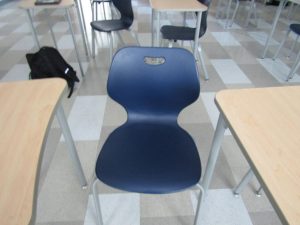
Plastic ergonomical chairs are in every classroom in the middle and high school
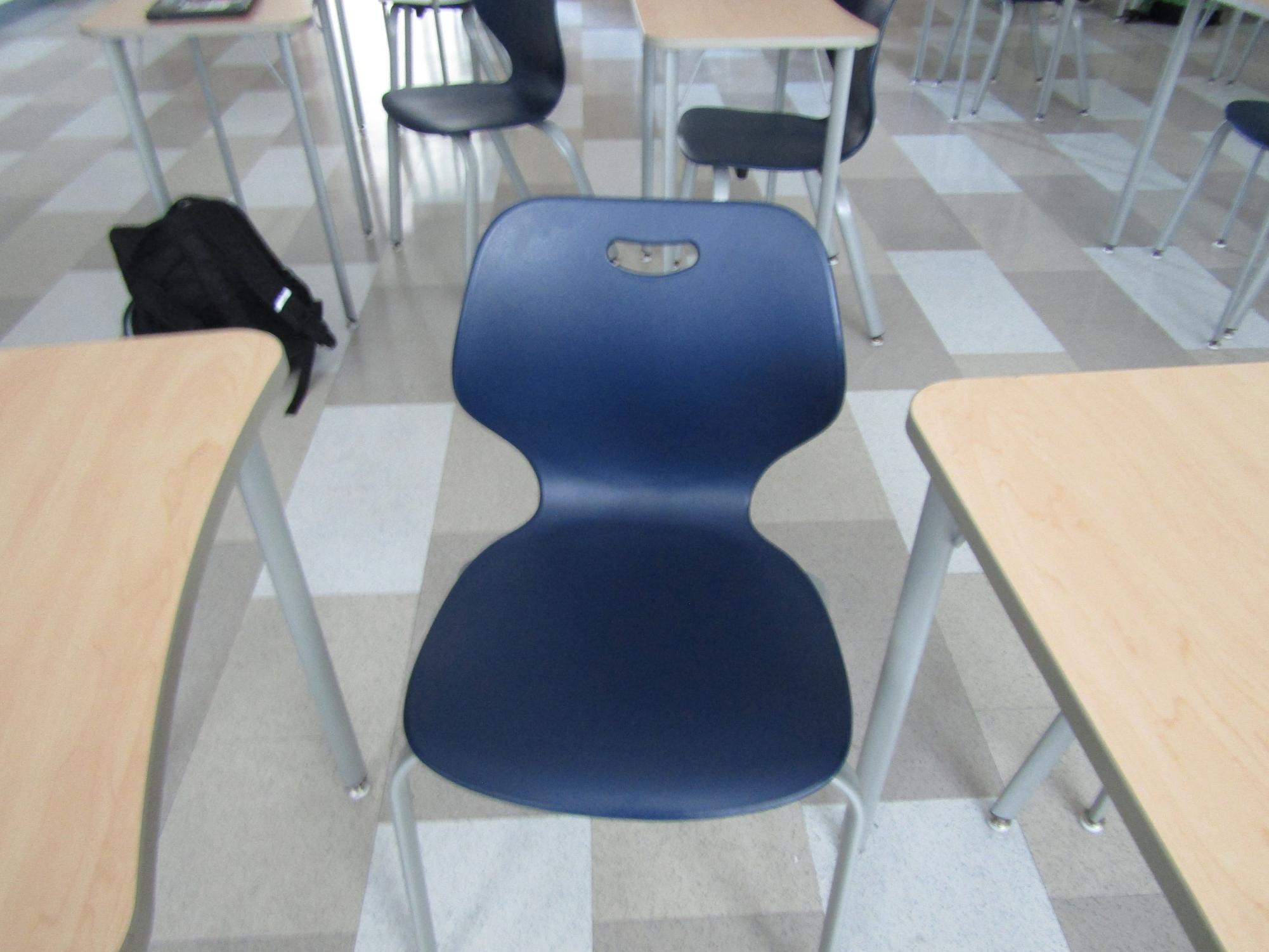
-
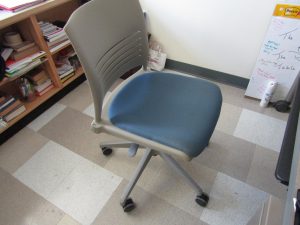
A rolling padded chair is provided for teachers and their desks
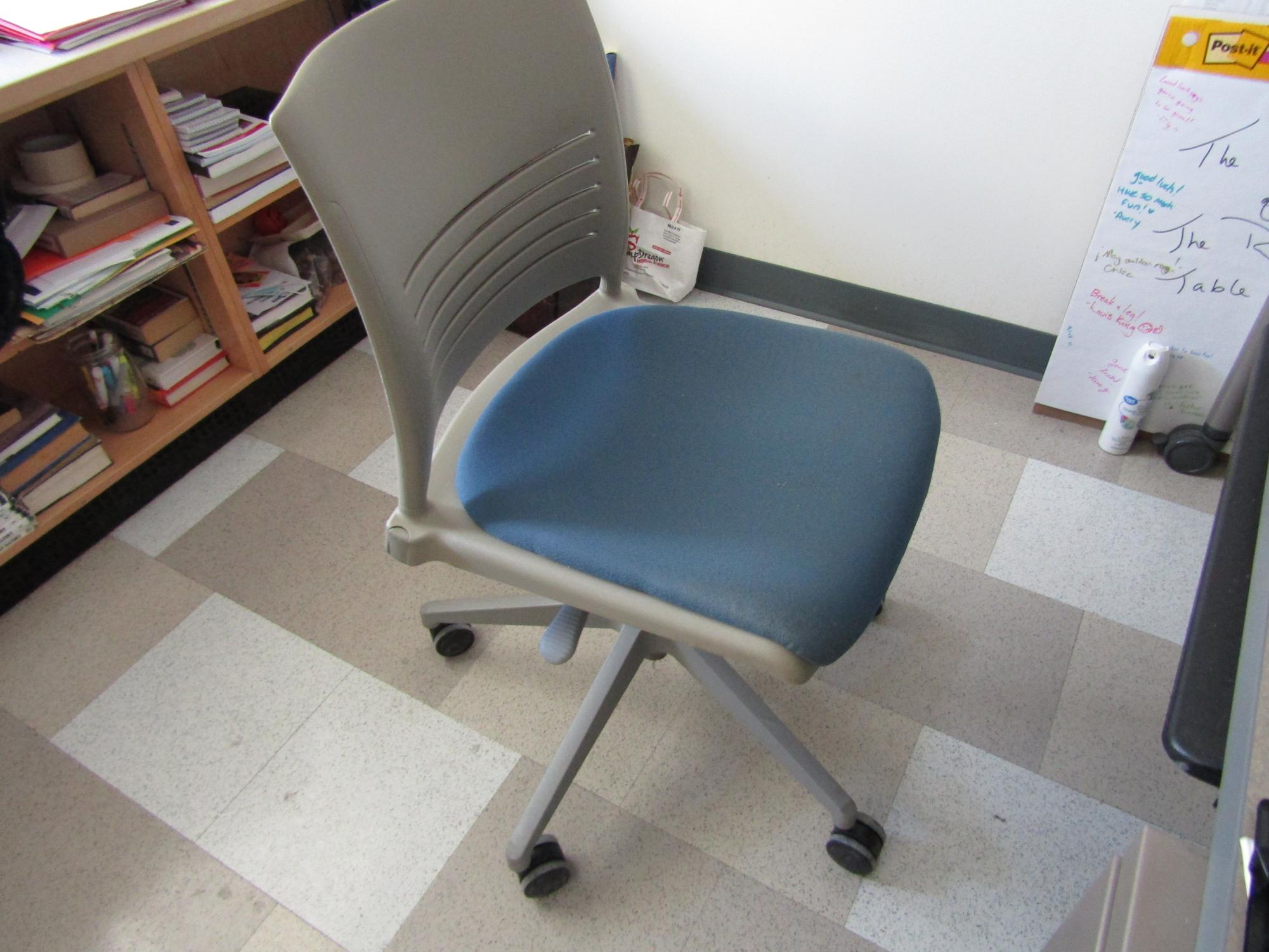
-
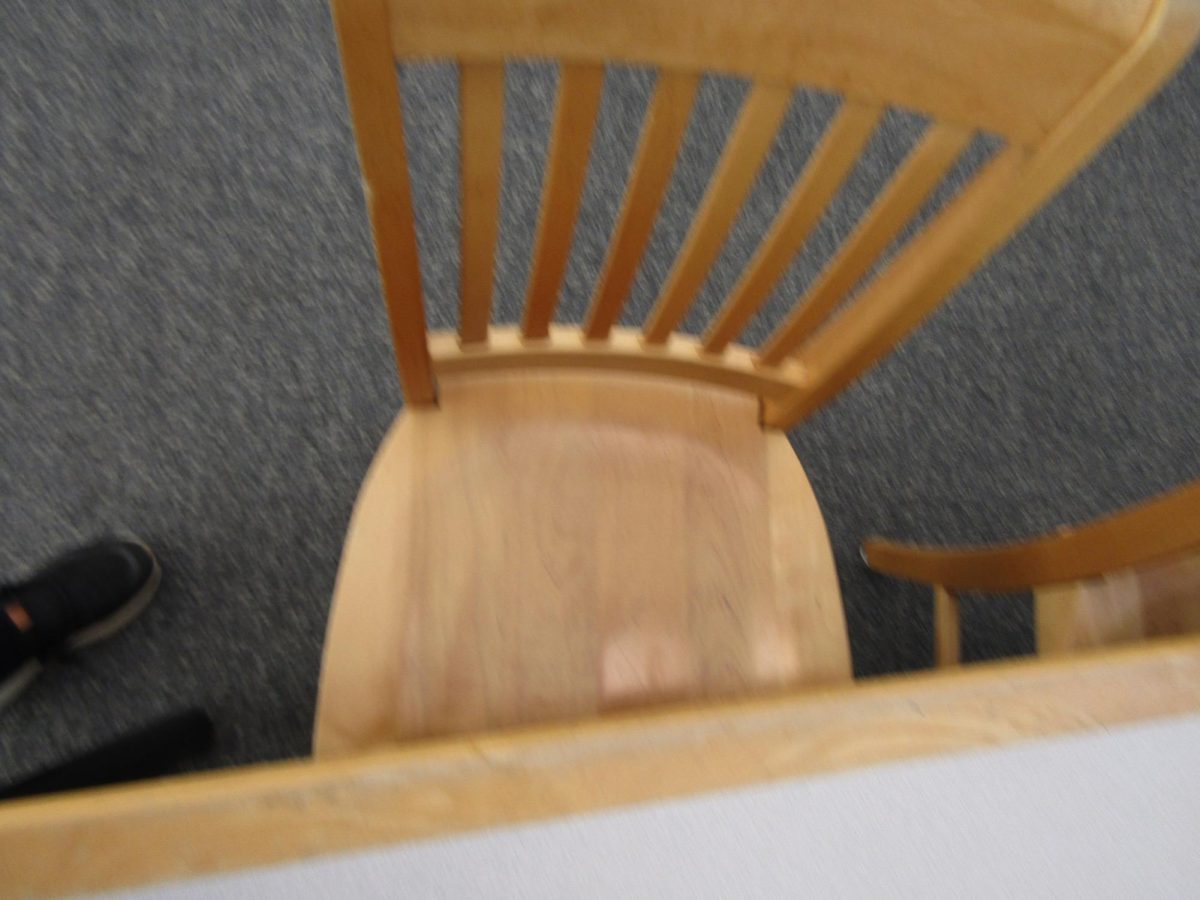
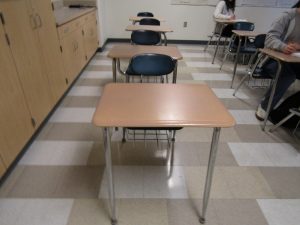
A classic chair attached to the desk is still in a few classrooms
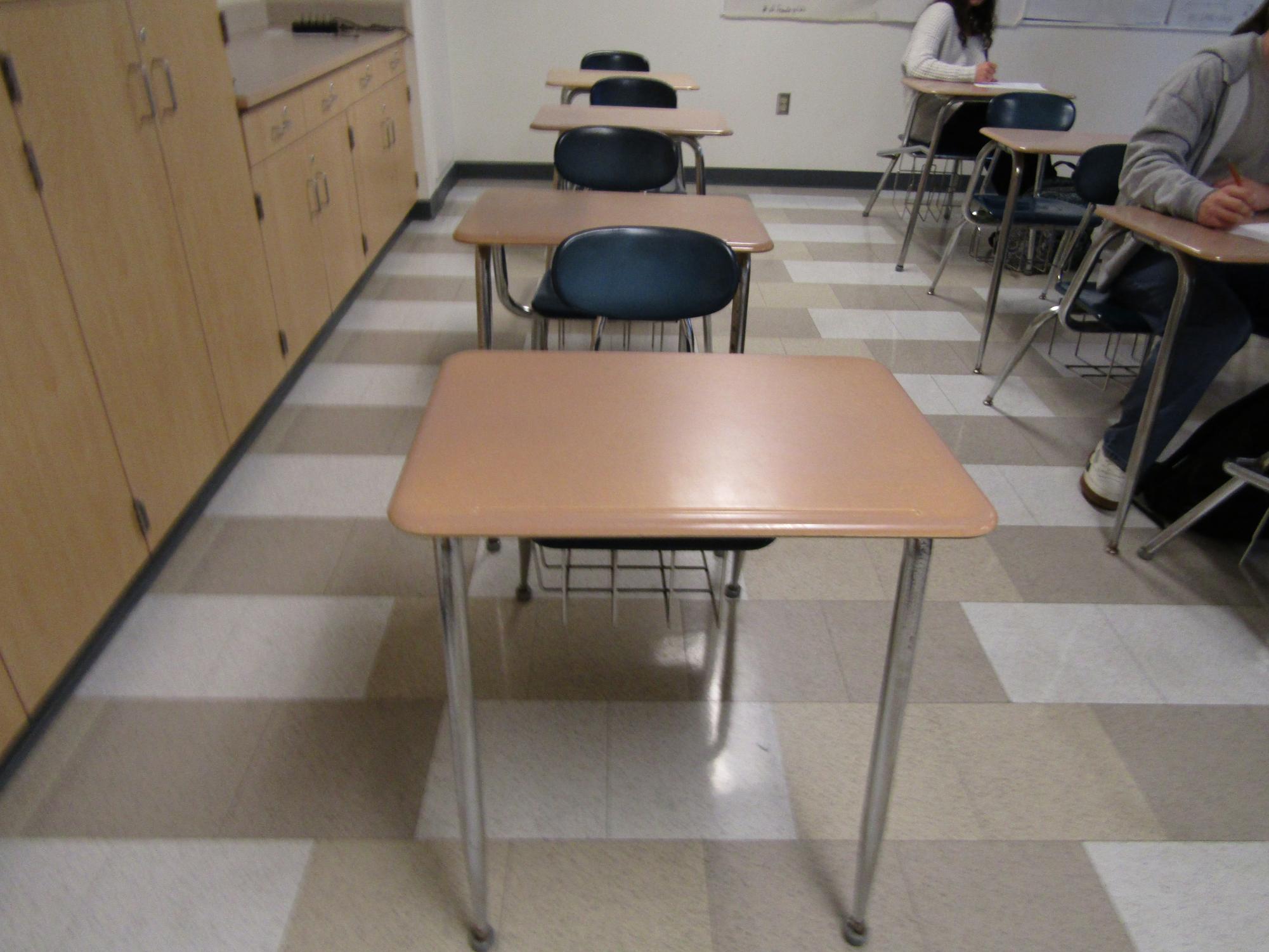
-
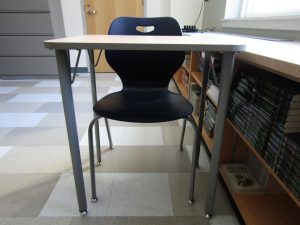
A free standing desk is paired with the blue plastic chairs
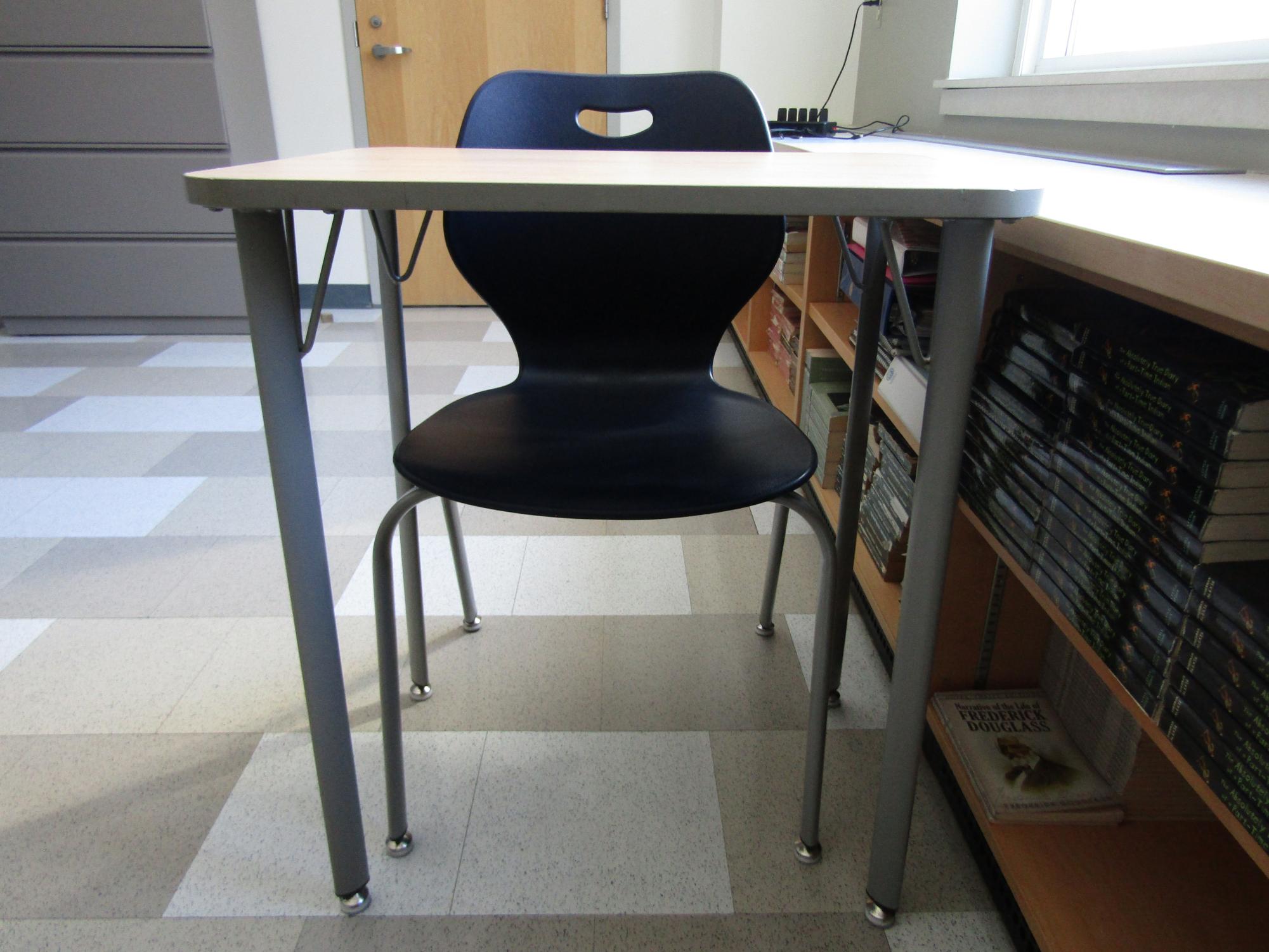
The normal price for school chairs can vary from 120 to 800 dollars depending on the style. The average length of life for school chairs varies from five to ten years. Factors contributing to the life of a chair are wear and tear, student movement, damage from cleaning chemicals and frequent moving.
Studies show that an ergonomic workplace can improve productivity, workers happiness and reduce workplace injuries. Ergonomic design means designing a space to suit the people.
Up to 10.8% of pupils report back pain as a result of chairs in schools. It is estimated that students between ages 5-16 will spend 15,000 hours of their life sitting in a school related chair. Some other seating options include cushions, balls, wobble stools and beanbag chairs. Flexible seating options may improve students behavior, engagement and learning.
Several people gave their opinions on the topic.
One teacher said, “he doesn’t mind the chairs and desks.”
One student said “they’re very used.”
A different student said, “they are fine”
These students and this teacher would like to remain anonymous for privacy reasons.
Whatever your opinion may be, mine is that while desks and chairs have improved, there is plenty of additional room for improvement.


Ms Brousseau • Mar 20, 2026 at 7:15 pm
I don’t think I’ve ever stopped to consider all the different kinds of chairs in our building! Nice work.