


















The prices of everything in our world are rising, and college is no exception.
The costs of college have risen significantly in the past few years. According to usnew.com, since 2006, the tuition of private institutions has risen by 32% (including the adjustment for inflation). Tuition for in-state students has risen by about 29%.
In 2022-2023, the average cost of attending an in-state institution and living on campus was $27,146 annually, and $58,628 annually for a private institution, according to educationdata.org.
For public institutions, the price has risen due to declining state funding, rising costs, and competition. Colleges are constantly in competition to get new buildings and staff, resulting in increased tuition, states npr.org. A final reason is that some colleges associate a higher price with prestige, so they raise their tuition.
Along with these reasons, prices continue to rise because the U.S. does not regulate tuition costs unlike many other nations. The U.S. has one of the highest prices for college tuition, according to bestcolleges.com. Compared to Europe, our costs are much higher. This may be due to the fact that they tend to treat higher education as a right, not a privilege; their program length tends to be shorter, and the cost of living is less, according to Schiller.edu.
When looking at the price of an institution, you must not only consider the cost of tuition but also room and board, textbooks and supplies, transportation, and any other expenses.
To combat these increasing costs, most students resort to taking out loans. According to educationdata.org, the average federal student loan debt in 2025 is approximately $39,075 per person. Since 2024, the average national loan debt has increased by 2.97%.
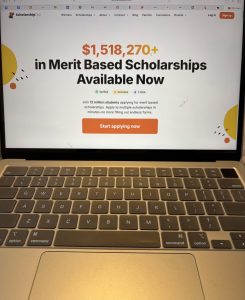
Another way to lower costs is to apply for scholarships. A scholarship is a grant or payment given to support a student’s education. There are many types of scholarships that students can apply for, including merit, athletic, and more.
Why not make College free? Although this seems like it would solve the issue, it would only create more.
According to Forbes.com, making college free would result in a decline in the quality of these institutions. Making it free would stop cash flow to universities, thereby reducing research, innovation, and overall university quality.
Another disadvantage is that this would only add to our already high national debt.
This system would also not fully help the student. It is believed that this system would most likely increase the number of students who do not graduate, according to Forbes.com.
Although I am unsure of a way to fix the system, there has to be a change because if prices continue to rise, college is only going to be affordable for the top few.