


















On February 14, 2026, we entered a partial government shutdown, with the funding for the US Department of Homeland Security lapsing. This is not the first government shut down we have seen in recent history, nor is it the first under President Donald Trump.
Not too long ago, from October 1, 2025 until November 12, 2025, the US people saw the longest government shutdown in history. The shutdown, which lasted 43 days, began due to Republicans and Democrats disagreeing over the Affordable Care Act. The Affordable Care Act ensures basic legal protections that help Americans afford health insurance coverage. This act allows 94% of Americans to have health insurance coverage.
The shutdown was mainly due to the Republicans refusing to extend parts of the ACA, while the Democrats pushed to keep it going.
Our current shutdown is mainly due to a disagreement over ICE and their operations. The main issue is that Republicans want to extend funding for ICE without any new regulations, while Democrats are insisting that new regulations need to be put in place if they are going to continue to fund ICE.

Democrats have many concerns over the power ICE holds following the deaths of US citizens Alex Pretti and Renee Good.
Some of the proposed regulations would include requiring warrants for any arrests made on private property, bans on ICE agents wearing face masks, requiring the use of body cameras, and new laws for use-of-force standards.
It’s important to remember when considering this issue that ICE and Border Patrol were recently granted 75 billion dollars on top of their 10 billion dollar budget through President Trump’s One Big Beautiful Bill Act, so even without new funding, there is plenty of money for these branches to continue operating.
However, the effects of this shutdown are already being felt throughout the country.
First of all, 90% of the employees that work for the Department of Homeland Security are continuing to work, even though many are not getting paid.
Included in that 90% are the TSA agents, who are deemed essential workers, also not getting paid.

It’s important to keep in mind that not too long ago, these workers also suffered through 43 days without pay due to a different government shutdown, and many are still recovering financially.
This has led to many workers calling out sick, which is affecting wait times at airports. Some airports are reporting up to 3 hour security wait times. These wait times during spring break season are causing many people to miss or nearly miss flights.
Also included in that 90% are FEMA workers. FEMA is the Federal Emergency Management Agency, and they support citizens and first responders during catastrophic events such as floods, hurricanes, tornadoes, wildfires, landslides, and more.
They also helped recently during the ice storms this winter by providing food and generators to people on the East Coast.
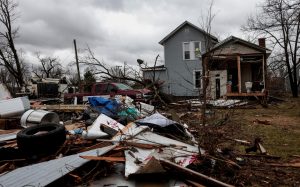
This includes helping to pay for repairs to schools, homes, and roads. However, this work will be slowed by the shutdown right when we sorely need it.
Another department affected by this shutdown is the Cybersecurity and Infrastructure Security Agency, or CISA.
In a technology driven age that faces a constant threat of attacks, this is a crucial part of our government.
However, 65% of the department has been placed on unpaid leave during the shutdown, leaving the US more vulnerable than usual.

Speaking of vulnerability, this shutdown halts pay for up to 56,000 Coast Guard personnel. These active duty, reserve, and civilian workers are still required to show up for work, but all missions that are not matters of national security or protection of life and property have been suspended.
Monday, the Senate voted on a Department of Homeland Security funding bill, hoping to end this 30 day shutdown. More work, however, remains to be done.
However, experts warn that even if the shutdown ends, there will be long-term consequences for everybody involved.