











If you live in Sutton, you’ve probably heard about the budget problems the school district faces.
But a lot of people have questions. Why are we in this situation? What solutions are there? How do we stop this from happening again?
I met with both the Middle and High School Principals, the Business Office Manager, and the Superintendent to get some answers.
First, how is the budget determined for the next year?
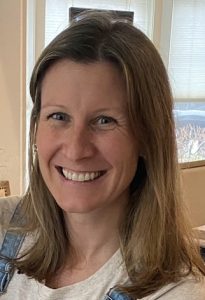
Every year Harrison McKinlay, the Business Manager, designs the budget by taking the costs from the previous year and then considering the requests for the next year. These requests come from principals, department heads, the facilities team, cafeteria staff, the superintendent, and other important people in the school.
This preliminary budget, with all of these requests, is then reviewed by the Business Manager, the Superintendent, the School Committee Budget Subcommittee, and eventually the School Committee.
If there are gaps in the preliminary budget and the money we expect to have coming into the school, that is when cuts must be made.
Some of these gaps have grown due to the effects of inflation, salary raises without proportional funding increases, and other financial constraints.
Now, what are some of the ways the school makes money?
Sutton is a public school, which means we get funding from the state of Massachusetts, but we also get money from taxes, grants, and revolving accounts.
The funding we get from the state of Massachusetts is called the Chapter 70 funding, and I talked to the Superintendent, Caitlin Paget, about it.
She told me that “The Chapter 70 funding formula doesn’t work for us…We are never going to be not a minimum aid district”
She explained a little bit more about this formula and the things it takes into consideration.
For example, the funding formula considers the diversity of a school.
As I’m sure everyone has noticed, Sutton is not the most diverse town in the area.
It also considers the wealth of the district, and although not everyone in Sutton is rich, Ms. Paget told me “there are some very wealthy people in Sutton that…make it appear that we are a district that has a lot of money”.
These factors contribute to Sutton not receiving the same amount of aid as other districts.
Another way the school makes money is through revolving accounts.
These revolving accounts include things like school lunch, the preschool, bus fees, parking lots fees, and other things like that. The money that comes in from these accounts also goes toward the school.
However, our money coming in is currently less than the money we are requesting to spend next year. This situation leads to budget cuts in order to close that gap.
I spoke to the Middle School and High School Principals about their priorities during these cuts.
The Middle School Principal, Shawn Rickan, said that for him, “the priority is obviously the people that are doing the service in the building.”

Mr. Urquhart, the High School Principal, commented during his interview that “I want to figure out what’s best for the kids…But for me, it’s also having adults in front of you that have a wealth of knowledge to prepare you for college, career, and more importantly, life”.
Keeping teachers in the classroom and helping kids succeed are important pieces of the puzzle. But how do we keep these resources when there isn’t enough money?
Well, as I mentioned earlier, the school gets money from the taxes paid by residents of the town. In fact, the school takes up the most amount of resources, according to Mr. McKinlay.
But one of the proposed ways to handle this gap is through an override.
What is an override, you may ask?
It is a tax increase on the residents in order to fund a new cost that must be proposed to and voted on by the townspeople in order to go into effect. For example, some towns may propose an override in order to go from a volunteer fire department to a full time fire department. Then the residents would vote on whether or not they think a full time fire department is worth paying more in taxes.

Currently, there is no override on a Sutton ballot, although there have been conversations at School Committee meetings about an override and what it would look like.
The Superintendent told me that “We just don’t have the strategic plan in place to know what we need, how much we need, and what we need it for…So our goal from this spring to the fall is to really put that plan together”.
Although an override would be enough to cover our gaps, it would not be a permanent solution. In a few years, we would have another budget gap that we would need to find a solution for.
Despite this gap, and the looming threat of the cuts, Mr. McKinlay told me “although we’re not in a great spot right now…we’re weathering the storm better than some of our neighboring towns.”
So now we know how the budget is made, what our administrators are fighting to protect, and one of the solutions that is being discussed.
The question of our next steps, however, still remains.